From every Guns N Roses song to every "my hammer is my ex" joke, the new Marvel tale starring the god of thunder is the high school play version of a children's story. Thor (Hemsworth) returns to reunite with a newly powered Mighty Thor Jane Foster (Portman) to face off against Gorr (Bale) as he attempts to kill all the gods. What could be more basic than that?
It was hot in Seattle. Damn hot for a city that throughout history has not needed air conditioning. What we needed was a long movie for comfort. What we got was assaulted.
This musical assault of a movie was happening in the Dolby theater of the local AMC. Big sound and reclining chairs. I could live there if they would only install a kitchenette.
We sat down for Baz Luhrman's Elvis. My history with the director is pretty good. Romeo + Juliet was my high school crush, Moulin Rouge was a college fling, and Great Gatsby was the pretentious one that made me realize what I really wanted. I do not need all the flash and glamor, but it is fun to get a little crazy.
After the first ten minutes, I leaned over to my friend and, talking to myself as well, asked if she was okay. She did not know. We had both been assaulted with a barrage of light and sound so potent and overwhelming I found my brain had skipped a beat or two. I could not tell you what happened. Only that it hurt. Not in an aggressive punk rock way, but in the way a family member yelling that all the good cereal was gone. Solid trauma.
The film flows with vibrant and jarring sights and sounds for most of the run time. When the musical performances hit, they act like well done MTV at the height: visual representations of songs that illustrate moments in Elvis's life from church services to iconic spasm filled stage ballads. But the music does not stop. Rather than being punctuation, the music is the whole sentence. The relentless dumping of information through song drains all narrative flow. Yet the recreation and the emotions of iconic moments like the first pink suited wiggle and black leather clad special return to form are amazing. Too bad there's few moments to breathe.
What does get a moment to breathe are the actors. Actors Austin and Hanks center the story and both are giving it their all. In recreating Elvis, we see hope and conflict as Elvis's mental and emotional capacities decline with Austin's subtle and solid performance. Yet Hanks steals the show in one of the more off putting performances of his career. Like a devil of folklore, Hanks's Parker is a weird, conniving, broken creature sent to suck the fight from Elvis by giving him everything he wants. Had the performance been more subtle it may have worked, but Hanks repulses more than invites. There is no redemption for this villain. No excuse why Elvs would be tempted by the man. Elvis is not a hero; he is the carnival sideshow Parker leeches for all he is worth.
Elvis in the end is the carnival attraction it told us it was. Bright and bombastic yet led by a life sucking swindler forming a grotesque affair more akin to Nightmare Alley than A Star is Born. The tragedy here is in the execution.
Another Marvel, another day. In this episode of a thirty-year-old dude's version of grandma's stories, a wizard has to protect a girl from an evil witch.
Picture this: A sixteen year old kid, lanky wearing a spiked bracelet and a shirt of the punk band Rancid, stands outside a college lecture hall. He's having a cigarette, waiting for the last possible moment to go inside where his friends are because he's awkward around lots of people. An old man with curly brown hair, some gray finding its way, stands off to the side with a group of stuffy academics. The old man walks to the punk kid and bums a cigarette, then moves back to the professors. The child goes inside to find his friends. A few minutes later, the lights go down and the old man walks onto the stage. The lecture does not change the boy's life, but it blew his damn mind.
So that's how I met Kurt Vonnegut, albeit briefly. Seemed like a nice man.
I've been thinking about that this week. Two people united by a bad habit passing in the night. One of them is an acclaimed author and humanitarian. The other a kid who wanted to write but did not know how.
That was my first time hearing a published author speak. High bar, right? His lecture on storytelling and the happiness of the characters rocked me, as did his books when I inhaled several of them. Hearing him speak, Vonnegut either loved or hated storytelling because those are the only emotions I can conceive that would produce the depth of thought on the subject.
Since then, I have heard many authors speak. In a small bookshop in Utah, I heard Dennis Lehane talk about his process. I drove all night and most of the next day from Mississippi to Arizona to get Christopher Moore to take a picture with my friend's lawn gnome. Just the other night, I saw Neil Gaiman read and speak in Seattle.
I love them all, but none will touch the first. The greatest of high bars.
Maybe I was too dumb to know better.
I do wonder why the hell he did not have a cigarette on him, though.
What would the world look like if it was remade how the library saw fit? Probably fucked up. We tend to have issues with plans if we think too far ahead.
A lot of stories are like that. The hero's journey is based on the fact that the hero is wrong about the way their life works out. They want something, like to get away from the humble dirt farm they grew up on, all the while the audience sees that they just need companionship and purpose. Stop trying to kill the Empire and hug your friends, Luke Skywalker.
The tragic version of this comes out in movies like The Northman. Based on the story of Amleth that was the basis of Shakespeare's Hamlet, it's about a kid who has his dad killed and vows revenge. Where Hamlet's revenge comes in a slow poison death for all involved, the Northman ends with a naked volcano sword fight after a period of violent magic sword hackery. The journey of both heroes is the same, however, to learn that revenge is much more petty than tearing down the whole system. Sad to say that as a part of the system of betrayals and violence, the hero of those stories must also be torn down. The tortured hero cannot live in a utopia.
Villains plan. By their nature, they create chaos by any means to get what they want. The majority of stories start with some evil nerd trying to get money or an evil stepmom trying to get the house cleaned. Then some hapless cop or poor dirty girl have to get involved, spending half the time reacting while the villain tears shit up until they gain the skills, equipment, and friends to start kicking ass. Or some random prince rolls in with a fancy shoe and kicks stepmom to the curb.
What can we learn from all this? How can the library plan without becoming the villain? How can we react with any surety of the future? How can we learn from the stories we tell ourselves, we humans, that compassion and empathy give way to rich lives without sounding like assholes?
Fuck, got lost in another rabbit hole.
Come down to the library for story time this week. We're talking American Hippo by Sarah Gailey and how the world can be different sometimes based on how you look at it. Alternate histories abound in the forever fields of the human mind.
The library has been bored lately. Right now, as we type this, we have Luca playing on Disney+ and wondering what it all means. Not Luca, it's a pretty standard coming of age Pixar monster. No, we are thinking about life, the universe, and everything as a pretty normal dude once said.
"Paige, we wanted to talk to you about some of the displays you have been creating," Jaime said.
I said, "There have been some complaints."
"Was there any display in particular that was worse than the others?" Paige asked.
All kinds of people come to the reference desk with their minds bursting with questions. Do you have tax forms? How did the local sports team do at the recent sports match? Paper or boxers?
An old man came to me and the following conversation happened.
Professional sex havers get hacked apart in the woods and explore what desire and freedom can do when taken from you.
Comparing Batman to Superman by lookng at what makes them who they are.
Why does Batman keep a secret identity? Sure, stocks at Wayne Enterprises might go down if everyone found out Bruce Wayne was beating up poor people every night. Imagine the social media uproar.
I whine about how secret identities are not really a thing unless you consider the ones you do everyday.
The bookmobile shuttered to a stop. The grinding of the parking brake settled the large lumbering vehicle like an elephant stopping from a run to get a drink. The body shook as someone moved within.
Who's got three thumbs and likes to beat criminals senseless? What has three city officials killed, a mobster put to his crimes, and a masked maniac who loves another masked maniac? If you said Batman to either of those, then you saw Matt Reeves's The Batman and also The Dark Knight.
Studio 666, the new horror film starring the Foo Fighters is a little creepy, kinda funny, and full of "Who let these maniacs into the theater?"
Cyrano, starring Peter Dinklage and some other people, is a musical, something I do not think the advertising liked to talk about to the point where some guy in the back row said, "The fuck" when the singing started.
The library asks that you not go into the study room alone unless you want to stay that way.
Mr Jacobs's bright orange hair cleared the reference desk. It stuck out in spikes, three inch tubes that tapered to fine waxed points here and there. The face paint smeared itself on the mask just under his big red nose.
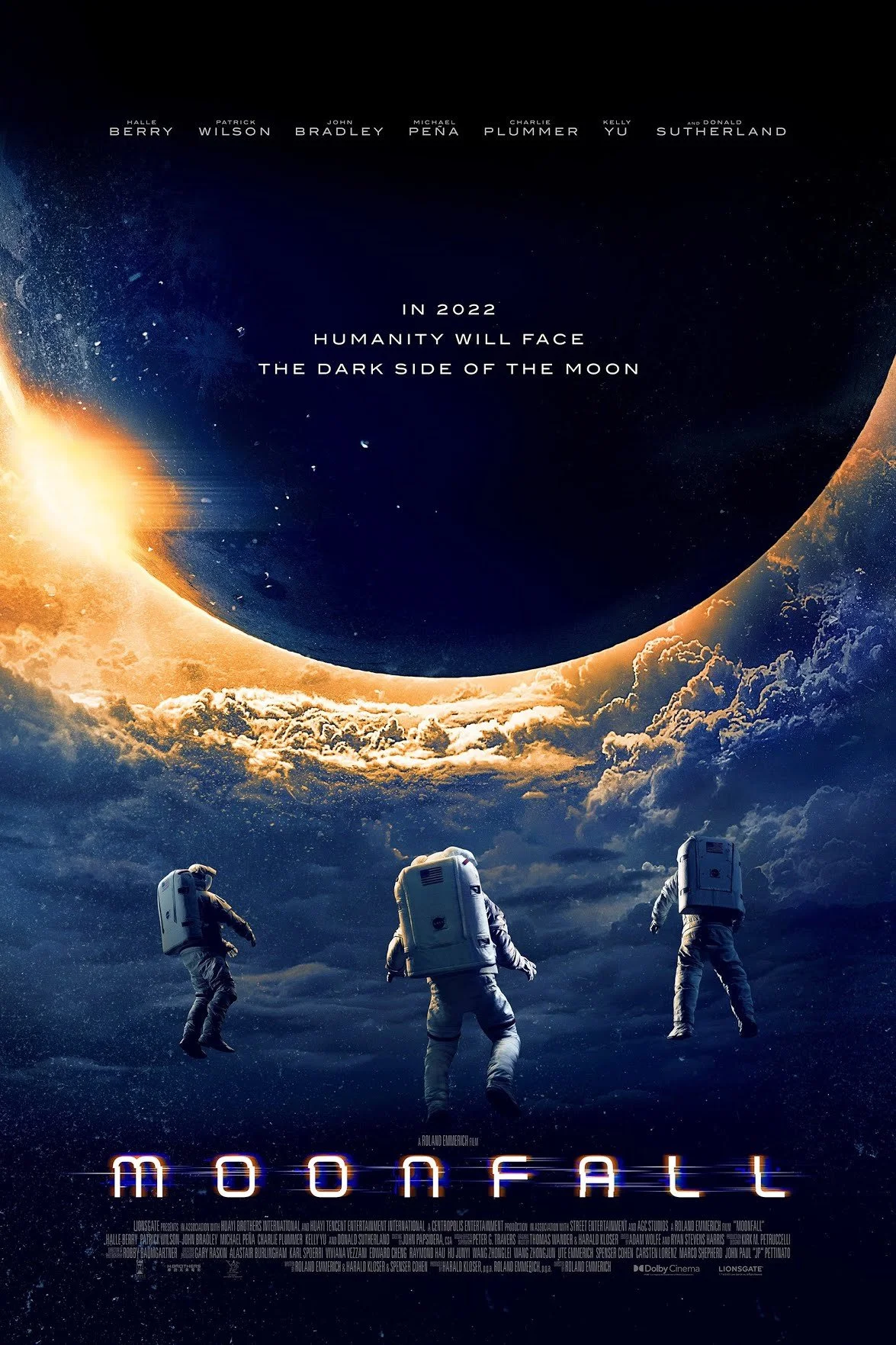
If you see one movie about the moon trying to kill everyone on Earth, then maybe try out Moonfall, Roland Emerich's latest beefy fuck you to all science and human emotion everywhere.
The baying of hounds began the hunt. They howled and raged and pulled at their leashes. Behind them a large man in a fur cloak filled the library door. He snapped the heavy leather that wrapped around their necks.
"Hunt, my hounds," he said in a deep bass that rattled the metal shelving.